Business networking for company owners: which connections to seek, where to find the right people and how to turn contacts into deals.
Many business owners frown at the word networking. It brings to mind events with name tags, swapped business cards and conversations that lead nowhere. And networking done like that is, indeed, a waste of time. But almost every big deal you have ever closed started with one person introducing another: the customer who referred a customer, the supplier who mentioned an opportunity, the friend who knew the right buyer.
Business networking is turning that chance into a method. It is not about knowing many people, but about knowing the right people and nurturing those relationships over time.
What business networking is, and what it is not
Business networking is the network of relationships that helps a company grow: it brings customers, partners, better suppliers, access to capital and information ahead of competitors. It is not selling all the time, nor collecting contacts on your phone. A good network is a two-way street: you help and you are helped.
Which connections your company needs
Before going out looking for people, map who can make a difference over the next two or three years of the business:
- Customers and distributors. Dealers, buyers and sales representatives who open new regions.
- Partners. Companies with complementary products, with whom you can sell together, develop products or share infrastructure.
- Strategic suppliers. Those who can bring better technology, lead times and prices than your current ones.
- Capital. Investors, potential partners, banks and managers of development credit lines.
- Talent. Executives, technicians and future leaders who may one day join the team.
- Advisors. More experienced business owners who have already been through what you are going through.
An agricultural implement manufacturer that wants to enter a new region, for example, needs dealers there, a bank that understands farm credit and perhaps a partner with local technical service. These are three very different connections, and each one is found in a different place.
Where the right people are
- Business associations. Industry and trade associations, employer unions and chambers of commerce, including bilateral chambers that bring foreign companies closer.
- Trade shows and business rounds. They gather buyers, suppliers and competitors in a few days. See how to get the most out of agribusiness trade shows.
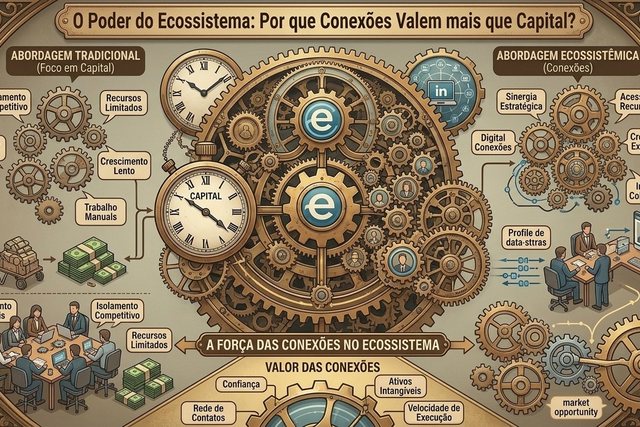
- Innovation ecosystems. Technology parks, universities and startup groups, where the solutions industry will use tomorrow are born. Learn why connections are worth more than capital.
- Business owner groups. Boards, sector groups and peer groups where owners exchange experience.
- LinkedIn. To stay in touch, follow people's careers and be remembered for what you share.
For a foreign company that wants to sell in Brazil, the logic is the same: bilateral chambers of commerce, sector trade shows and a local partner who already knows the buyers open more doors in six months than years of trying alone. See how to enter the Brazilian market.
How to turn a contact into a relationship
- Help before you ask. A referral, a useful piece of information or an introduction is worth more than any sales pitch.
- Follow up within 48 hours. A short message after the meeting, recalling what you discussed, separates those who build relationships from those who just collect cards.
- Write down the essentials. Who the person is, what they do, what they are looking for and what you agreed. A simple spreadsheet is enough.
- Be the connector. Introducing two people who can do business together is the fastest way to be remembered and to receive referrals in return.
- Stay consistent. A coffee every quarter with key people is worth more than ten events a year.
A simple example: the owner of a trucking company who introduces a customer to an implement manufacturer gains nothing that day. But both start to remember him, and the next freight referral or partnership often comes precisely from those he helped.
The most common mistakes
- Turning to your network only when you need it. Those who only show up to ask find no open doors.
- Talking only about your own company. The best conversations start with questions about the other person's business.
- Delegating every relationship. Some connections, especially with investors, buyers and strategic partners, need the owner.
Conclusion
Business networking is not an event, it is a habit. Map the connections the company needs, be in the right places, help first and nurture relationships consistently. Over time, opportunities start arriving before you go after them.
Frequently asked questions
What is business networking?
It is the network of relationships that helps a company grow, with customers, partners, suppliers, investors and talent. It is a two-way street: you help and you are helped.
Where can I do business networking?
In industry and trade associations, chambers of commerce, trade shows and business rounds, innovation ecosystems, business owner groups and on LinkedIn.
How can I network without seeming self-interested?
By helping before asking: a referral, useful information or an introduction. Relationships that start with an exchange of value last longer.
How much time should a business owner spend on networking?
Consistency matters more than quantity. Setting aside a few hours a month to nurture key people makes a difference over a year.
Looking for a specific connection: a partner, a distributor, an investor in Brazil? Bullseye is a hub of strategic connections. Talk to us.